You’re probably hearing about Hyaluronic Acid in lots of places - especially when it comes to skin care. Did you know our bodies actually make it on their own? As we age, we could benefit from the properties of Hyaluronic Acid. Read on to find out the best way to optimize the potential of Hyaluronic Acid for your needs.
What is hyaluronic acid?
Hyaluronic acid (HA) is a naturally occuring substance found in our joints, eyes, and nails. It provides structure and helps keep moisture in the tissues where it is found. It also helps to lubricate and cushion our joints thanks to its elastic chemical properties.1
Where does it come from?
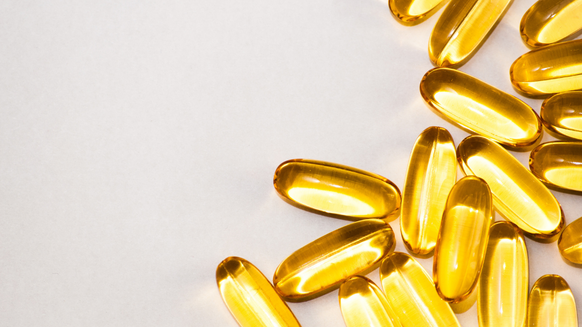
Hyaluronic acid occurs naturally in our bodies but can also be manufactured into many forms - like creams, serums, injectables, and supplements.2 Because of its firming and moisturizing power, there is great interest in the role that hyaluronic acid can play in anti-aging.
Hyaluronic acid benefits:
1. Hyaluronic acid can slow down skin aging
Research has shown that the levels of hyaluronic acid in our skin decrease as we age. For this reason, boosting the amount in our skin can help slow down the signs of aging. You’ll see many topical creams and serums with HA on the market, but only some have the right concentration and molecule size to be effective.2 For this reason, oral supplements are available to support skin benefits.
2. It may help with eye health
Hyaluronic acid has been shown to support successful cataract surgery procedures. As this is a common issue for many in later stages of life, it can play a role in successful surgeries to preserve vision and quality of life.1
3. It has been proven to help with wound healing
When our skin has an open wound that needs to heal, we need the newly forming skin to be healthy, elastic, and moisturized - all things that hyaluronic acid can support.1 While wound healing can be very serious in those with other conditions, like diabetes, this is a crucial application for HA.
4. It could help with joint pain
Because hyaluronic acid has been approved for cosmetic procedures (like wrinkle injections), there is interest in using it as an injected treatment for knee pain and other osteoarthritis. Some research indicates that hyaluronic acid can have overall anti-inflammatory properties.1 While logical supports that joint injections could be beneficial, additional study is needed before this becomes a recommended treatment.2
Hyaluronic acid dosage and when to take
Hyaluronic acid has been studied mostly in dosages of 100-200mg per day. Injections are only done by health care providers and dosage of creams/topicals should be followed based on label instructions. It does not matter what time of day you take HA.
Are there any side effects?
Anytime you take a supplement or use a topical substance on your skin, you could have an allergy or reaction to any of the ingredients. You might want to test a small area of your skin especially if it is sensitive. However, there has not been any negative side effects shown in HA supplementation.2 Side effects from injections still need to be studied.
Take Home Message
Hyaluronic Acid occurs naturally in the body and comes with a wide array of anti-aging benefits related to skin and joint health. It's even been shown to have positive effects related to eyesight!
If you are going to supplement your routine with HA then 100 to 200mg per day is recommended.

<p style="text-align: center;"><span data-sheets-value="{"1":2,"2":"„Завършил университета в Фордъм, Иън е учил по комуникации и медийни изследвания с акцент в журналистиката и непълнолетен в антропологията по времето си в колежа. Тук пишестати за университетския вестник, класиран в десетте най-добри в страната.\r\n\r\nСъстезателен спортист през по-голямата част от живота си, Иън е прекарал почти десетилетие, като работи като спасител на океанска спасителна служба в Ню Джърси. В рамките на тази роля той се състезава в спортни състезания за издръжливост срещу други спасители през последните 8 години.\r\n\r\nКато сърфист през целия живот Иън прекарва по-голямата част от свободното си време в океана, независимо от времето на годината. Освен това се радва на бягане на дистанция, фотография и често харчи изцяло твърде много пари за билети за концерт. \""}" data-sheets-userformat="{"2":835,"3":{"1":0},"4":[null,2,16777215],"9":1,"11":4,"12":0}">Завършил университета в Фордъм, Иън е учил по комуникации и медийни изследвания с акцент в журналистиката и непълнолетен в антропологията по времето си в колежа. Тук пишестати за университетския вестник, класиран в десетте най-добри в страната. Състезателен спортист през по-голямата част от живота си, Иън е прекарал почти десетилетие, като работи като спасител на океанска спасителна служба в Ню Джърси. В рамките на тази роля той се състезава в спортни състезания за издръжливост срещу други спасители през последните 8 години. Като сърфист през целия живот Иън прекарва по-голямата част от свободното си време в океана, независимо от времето на годината. Освен това се радва на бягане на дистанция, фотография и често харчи изцяло твърде много пари за билети за концерт. </span></p>
References
1. Goa, K.L., Benfield, P. Hyaluronic Acid. Drugs 47, 536–566 (1994). https://doi.org/10.2165/00003495-199447030-00009
2. Papakonstantinou, E., Roth, M., & Karakiulakis, G. (2012). Hyaluronic acid: A key molecule in skin aging. Dermato-endocrinology, 4(3), 253–258. https://doi.org/10.4161/derm.21923